The Match Programme as a Keepsake
A match programme becomes a keepsake when chosen details preserve the day’s particular texture, turning a fixture’s printed information into a personal record.
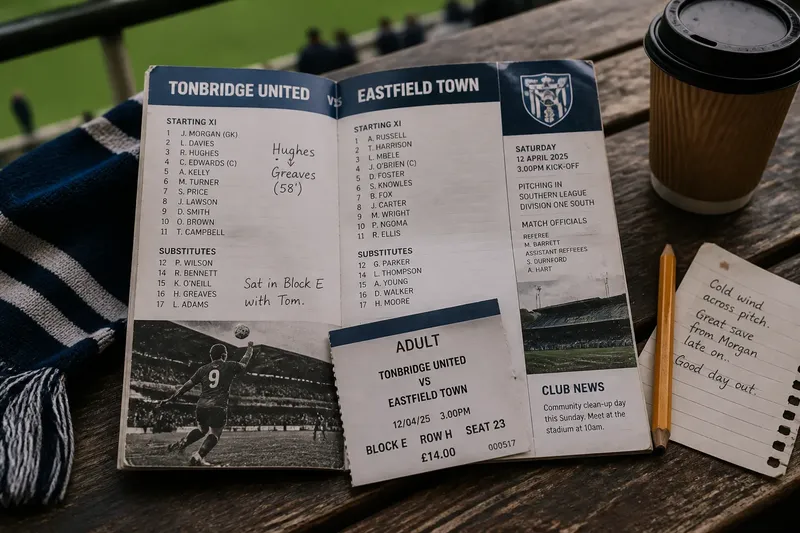
A match programme can keep a matchday present long after the score has slipped from memory. Its fixtures, names and notices begin as practical information; the details a reader circles, folds around or later recognises can turn it into a record of one particular day. The change is not automatic. It comes from attention.
A programme starts as a guide to the event
Before the first whistle, a programme helps a spectator place the occasion. It may identify the teams, list players, explain competition arrangements, introduce officials and set out timings. Advertisements, club notices and short pieces about the season locate the match within a wider routine of sport and community.
That practical role gives the object its first layer of meaning. A team sheet can be checked against the names announced; a printed kick-off time can be compared with the moment the crowd settles. The programme is useful because it gathers information in one portable form, not because every reader will study every page.
Its design also hints at how the event expects to be read. A prominent fixture title makes the match easy to identify, while a crowded page of small type asks for patience. Paper stock, binding and the amount of space given to editorial material all influence how the programme is handled, even if nobody consciously considers those choices.
Personal details turn information into memory
A keepsake is not simply an old object. It is an object connected to a remembered experience, and the programme offers many possible anchors: a player’s name, a handwritten note, a ticket tucked inside, or a page opened repeatedly to check a substitution. One small detail may carry more force than the publication’s official account of the match.
Readers make those details personal through use. Someone might mark the starting line-up, jot down the name of a friend who attended, or circle a fixture they plan to revisit. Such marks do not need to tell a complete story. Their value lies in pointing back to what the reader noticed at the time.
Imagine a supporter who arrives with a sibling for a match neither expects to remember as a landmark. The supporter notes the late change to the line-up beside the printed names and slips the ticket between the pages before leaving. Later, the altered team list recalls the conversation about the replacement, while the ticket restores the sense of having entered the ground together. The programme has become a record through an ordinary decision to keep two connected traces.
The page can hold more than the result
A final score is easy to record, but it can flatten the experience. The programme may preserve other elements that made the day distinctive: a player’s first appearance, a farewell notice, a sponsor’s local advertisement, a weather note written in the margin or a fixture against a rarely encountered opponent. These details can make the match legible as an event rather than merely a result.
Even routine pages can gather meaning over time. A roster fixes the names and numbers presented to spectators that day, while a club update captures what the institution chose to say about itself. An advertisement may show which businesses wanted to be associated with the crowd. The printed object therefore holds both a personal view and the public language surrounding the match.
What deserves to be retained depends on the reader. One person may care about a particular player; another may value the programme’s illustration or the familiar shape of the club’s matchday notices. Keeping the page that matters is more useful than trying to treat every page as equally significant.
How do you choose what to keep?
Should you write in the programme?
A brief note can preserve a detail that printed coverage misses, such as who sat beside you or why a player’s name mattered. If you want the programme to remain clean, place the note on a separate slip and keep it with the publication instead.
What should you record beside the line-up?
Choose information that will still make sense later: a name, a change you noticed, or the person who attended with you. A short note in plain language is usually more useful than an unexplained mark.
Is the programme meaningful without a memorable result?
Yes. A close contest, a familiar journey to the ground or a shared afternoon can matter independently of the score. A programme can preserve those associations even when the match itself was unexceptional.
How can you remember which match it belongs to?
Keep the cover visible, or add a discreet note with the opponent and date if the printed identification is hard to read. A loose ticket or a small diary entry stored alongside it can provide context without changing the programme.
Keep the object connected to its context
Loose papers often separate from the memories they were meant to support. A programme placed in a drawer without any indication of the match may eventually become difficult to identify, particularly if its cover gives only a team name or competition. A simple record kept with it can preserve the connection: the opponent, the date as printed, and a sentence about why the day mattered.
Physical care need not become a collecting project. Store the programme flat, away from damp and direct sunlight, and avoid forcing a fold or binding that has begun to weaken. If a ticket or note is included, keep it from rubbing against ink or leaving pressure marks; a separate paper sleeve can help keep the pieces together.
For a publication with unusual materials or fragile construction, follow its maker’s care guidance. The aim is not to make an ordinary programme look untouched, but to prevent handling or storage from erasing the details that give it personal meaning.
A keepsake is a record of attention
The match programme becomes memorable when its official information meets the reader’s own account of the day. A marked name, a saved ticket or a short note can join the printed event to the lived one without requiring a dramatic occasion. The publication’s ordinary function is what makes that transformation possible: it was already in the reader’s hands, open at the moment something worth remembering occurred.
If you are keeping a programme, choose one detail that tells you why it belongs with your other mementoes, and record enough context to recognise it later. That small act lets the match programme remain more than a document of what was scheduled; it becomes a personal record of what you noticed.