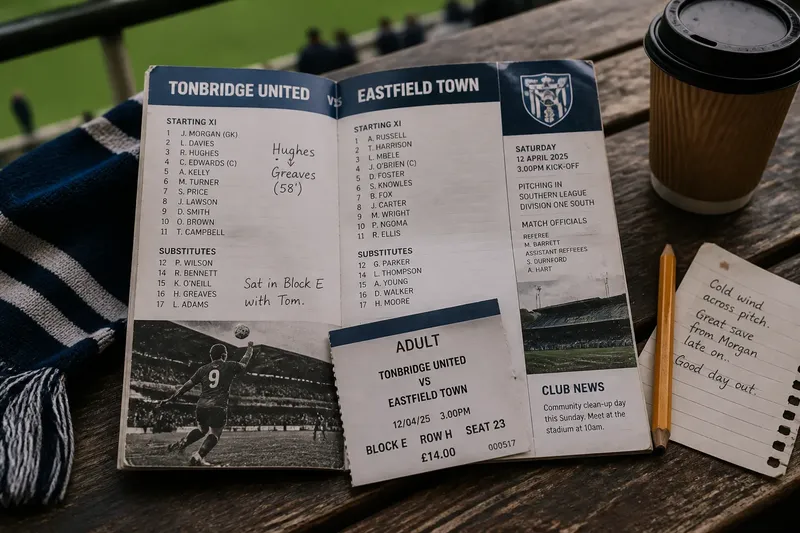
A First Visit to a Sporting Ground: What to Notice Before Play
A first visit to a sporting ground becomes more legible when you notice its approaches, entrances, sightlines and the frame around the playing area.
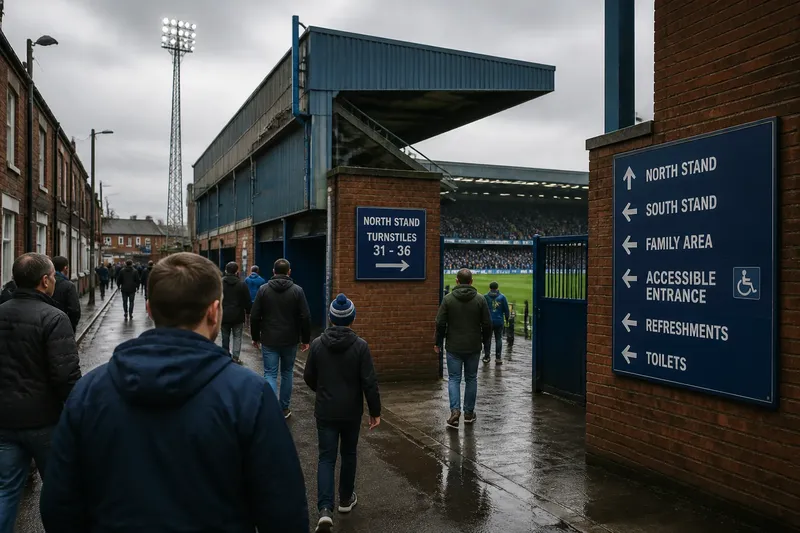
On a first visit to a sporting ground, the view from the street can be less revealing than the route towards the turnstiles. Notice how the building, signs and surrounding streets prepare you for play before a ball is in sight; then follow that visual trail inside. The ground becomes easier to read when you take in its parts in the order you meet them.
1. Follow the ground’s presence along the approach
Begin before you reach the entrance. Look for the first point at which the ground announces itself: a floodlight mast above the roofline, a stand behind a row of shops, or a change in the pavement that draws people in the same direction. This early glimpse gives the venue a scale beyond its walls.
Notice what sits beside it. A ground woven into ordinary streets feels different from one surrounded by open car parks or broad pedestrian routes. Fences, brickwork, trees and nearby buildings show how the venue meets its neighbourhood, while banners and street signs may turn an everyday route into part of matchday.
Try to notice the approach as a sequence rather than a single view: what appears first, what disappears, and what comes back into view.
2. Read the entrances as a map of belonging
At the perimeter, look at how entrances divide the crowd. Separate turnstiles might serve different stands, ticket types or groups; a wide open concourse may gather people before distributing them. The arrangement tells you where the ground expects visitors to arrive and how it organises movement.
Observe the language of the signs. A hand-painted board, a numbered gate or a large directional panel each sets a different tone, but all are part of the venue’s visual grammar. Check whether signs point towards stands, accessible routes, refreshments and facilities, and whether those directions remain visible as you move past queues.
Imagine arriving with a ticket for a stand you have never visited, while friends are waiting at another gate. You check the section name on the ticket, match it to the entrance board and agree to meet at a clearly marked point inside; the expected result is a simpler route without searching through the crowd at the last moment.
3. Pause where the ground first opens up
The first view of the playing area is often staged by a tunnel, stairway or low entrance beneath the stands. Notice what the architecture withholds and then reveals: a narrow corridor can make the pitch seem suddenly expansive, while an open concourse lets the action appear gradually.
Look at the edge of the field before looking for players. The boundary may be framed by a running track, advertising boards, a moat, a barrier or the front row of seats. Each changes the visual distance between spectator and action, and each gives the playing surface a different kind of enclosure.
Take in the transition from concrete, brick or paving to grass or a synthetic surface. That change is a useful visual threshold: it separates the circulation of the crowd from the space where play takes place.
4. Compare sightlines from the seat you have
Once seated, notice what the view includes and what it crops out. A low seat near the touchline may bring the action close but make the far side feel distant; a higher position can clarify formations while softening the sense of speed. The best view depends on which part of the event you want to follow.
Look for interruptions: a railing, a support column, a camera platform or the roof edge. Then check how the pitch markings sit in your view. Can you see both ends, the corners and the near boundary, or does the structure make one part easier to follow than another?
If you can, compare the view from the aisle with the view from your seat without blocking anyone. The small change in angle may reveal why a stand is shaped as it is.
5. Notice how the stands frame the playing area
Now look away from the surface towards the enclosure around it. A continuous bowl directs attention inward; separate stands create distinct walls, each with its own height, roof and rhythm. Gaps between sections expose sky or neighbouring streets, making the ground feel open rather than sealed.
Observe the roofline and the material beneath it. Metal trusses, translucent panels, timber or concrete create different patterns overhead, while the shadow they cast changes the contrast between the field and the seating. At a smaller ground, an uncovered terrace may leave weather and daylight plainly visible as part of the scene.
Notice colour in context rather than in isolation: seat blocks, rails, stairways and banners may form bands that guide the eye towards the field. A ground’s frame is not simply decoration; it shapes how the playing area appears from each stand.
6. Watch the visual frame change as play approaches
Before play, the ground is full of small preparations: staff checking boundaries, players warming up, spectators finding their rows and stewards holding open routes. Watch how these movements activate different parts of the architecture. An empty stairway may become a stream; a quiet stand may gather colour and sound as people settle.
Notice which details remain visible once attention turns to the field. A scoreboard, clock, tunnel or bank of flags may stay at the edge of your vision, while signs and concourse openings recede. This is a useful way to see what the ground makes easy to follow and what it asks you to remember.
What should you look for on a first visit?
Where should I start looking?
Start on the approach, before reaching the gates. The first glimpses and the shape of the surrounding streets show how the ground connects with its neighbourhood.
How can I tell where my entrance is?
Match the stand or section printed on your ticket to the gate signs, then follow the directions inside. If the signs are unclear, ask a steward rather than guessing through a crowded route.
What makes one seat’s view different from another?
Height, distance and obstructions all affect what you can see. A low position can make nearby movement vivid, while a higher seat can make patterns across the field easier to grasp.
Which details should I remember after the match?
Choose one feature from each part of your visit: an approach landmark, the entrance arrangement, a detail at the pitch edge and a roof or stand shape. Those observations help you picture the place as a sequence, not just as a view of play.
A first visit to a sporting ground need not become a hunt for architectural details. Keep the route in mind—from the street to the gate, the first opening onto the field and the seat’s framed view—and you will have a clear way to orient yourself before play begins. On a return visit, notice which of those landmarks still guides you when the crowd is moving in the opposite direction.